
Why AI Still Gets These Phrases Wrong, and Native Speakers Don't
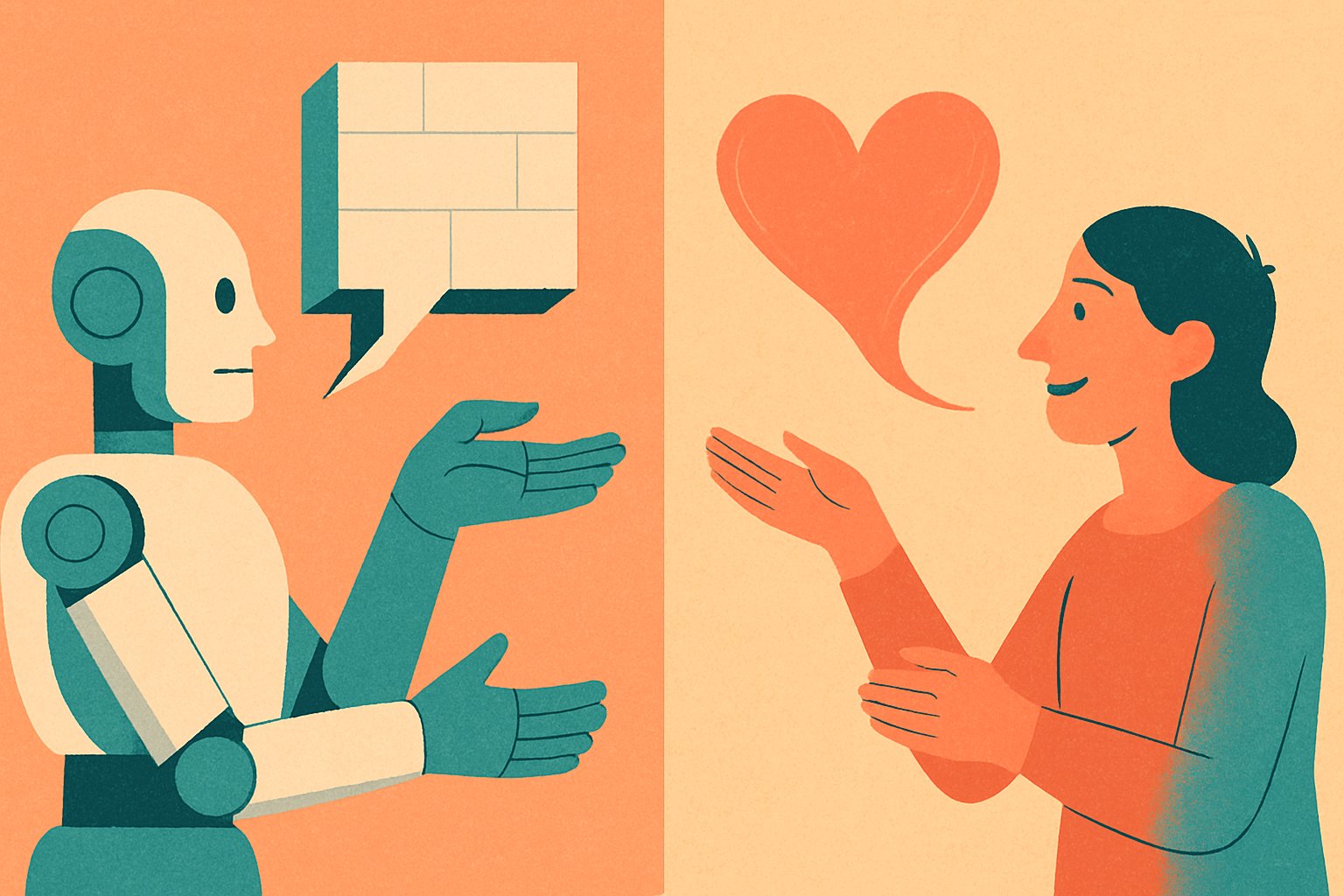
Ask any modern translation tool to translate a news article and it will do a genuinely impressive job. Ask it to translate the phrases people most often need, I miss you, happy birthday, will you marry me, and something strange happens: the output is technically correct and completely wrong at the same time.
That is not a contradiction. It is the central blind spot of machine translation, and understanding it will change how you use these tools.
The Phrases People Actually Search For
Look at what people ask a translation service to do, and a pattern emerges immediately. The most requested translations are not paragraphs of text. They are short, emotionally loaded phrases: how to say I miss you in Spanish, happy birthday in Portuguese, will you marry me in someone's mother tongue.
These phrases have three things in common: they are short, they matter enormously to the person asking, and they are exactly where machine translation is weakest.
Why Short Phrases Are the Hardest Case
This sounds backwards. Surely three words are easier to translate than three hundred? For a machine, no, and the reasons are structural.
1. No context to work with
Neural translation models resolve ambiguity using surrounding context. Give a model a full paragraph and it can tell whether bank means a riverbank or a financial institution. Give it three words and it's guessing. Miss you — is that romantic? Familial? Said to a colleague leaving the company? In English, one phrase covers all three. In Spanish, te echo de menos, te extraño, and more formal constructions carry different weights, regions, and degrees of intimacy, and the machine has nothing to steer by.
2. One phrase, many right answers, and the machine gives you one
Machine translation is built to output a single best guess. But phrases like happy birthday or congratulations often have a dozen legitimate versions that vary by region, formality, and relationship. Portuguese speakers might say feliz aniversário in Brazil but parabéns is what people actually write on the cake. A machine gives you a correct answer. A native speaker tells you which correct answer fits your situation, and which one will sound like it came from a textbook.
3. Register is invisible to you
Even when a machine's output is accurate, you cannot tell whether it's the version you'd say to a lover, a grandmother, or a tax office. The tool won't warn you that the phrase it produced is technically fine but oddly formal, mildly old-fashioned, or something no one under sixty says. Native speakers catch this instantly, it's the difference between knowing a language and having grown up inside it.
4. Idioms translate literally, and literally is wrong
Break a leg. It's raining cats and dogs. Kick the bucket. High-resource languages have enough training data that models now handle famous idioms reasonably well. But the moment you leave the well-trodden path, regional slang, newer expressions, wordplay, models fall back to word-by-word translation, producing output that is grammatically flawless and meaningless. And the failure is silent: the output looks fine to anyone who doesn't speak the target language, which is precisely the person using the tool.
The Stakes Are Personal
Here's what makes this blind spot matter. When machine translation garbles a technical manual, someone is mildly inconvenienced. When it garbles will you marry me, someone proposes in words that sound like a legal notice.
The phrases people most need translated are the ones going into tattoos, wedding vows, condolence cards, love letters, and toasts — moments where "technically correct" is not the standard. The standard is: would a native speaker actually say this, in this moment, to this person? That is a question a probability distribution cannot answer, because it isn't a probability question. It's a lived-experience question.
What Native Speakers Do That Models Can't
A native speaker translating I miss you doesn't just convert words. They ask, instinctively, who is saying it, to whom, and why. Then they do things no model does:
- They choose between correct answers based on relationship and region
- They flag the trap: "you can say it that way, but it sounds like a breakup"
- They offer the phrase you didn't know to ask for: the more natural thing a real person would say in that situation
- They tell you when not to translate at all: some sentiments are expressed with entirely different phrases, or a gesture, or food
This is why the best translation resources for phrases are not engines but people. On Babelfish, popular phrases routinely accumulate ten or twenty different community answers from native speakers, not because the first answer was wrong, but because a phrase like miss you genuinely has that many right answers, and seeing them side by side, with real speakers weighing in, tells you more than any single machine output ever could.
The Practical Rule
Machine translation and human knowledge aren't competitors; they're tools for different jobs.
Let the machine handle: volume, speed, and gist, articles, emails, documents, browsing, drafts. This is what neural translation is genuinely brilliant at, and it gets better every year.
Bring in a native speaker for: anything short, emotional, permanent, or public. If the phrase is going on skin, into a ring box, onto a gravestone, or in front of an audience, a human who grew up with the language should see it first.
The irony of modern translation technology is that it has mastered the hard-looking problem (long, complex text) while the easy-looking problem (three heartfelt words) still belongs to humans. That's not a temporary gap waiting for a better model. It's the nature of the problem: the shortest phrases carry the most human context, and human context is what native speakers are.
Need a phrase that has to be right? Babelfish combines instant AI translation in 46 languages with an archive of phrases answered and corrected by real speakers. Browse the phrases people asked about, the answers came from people who actually speak the language.